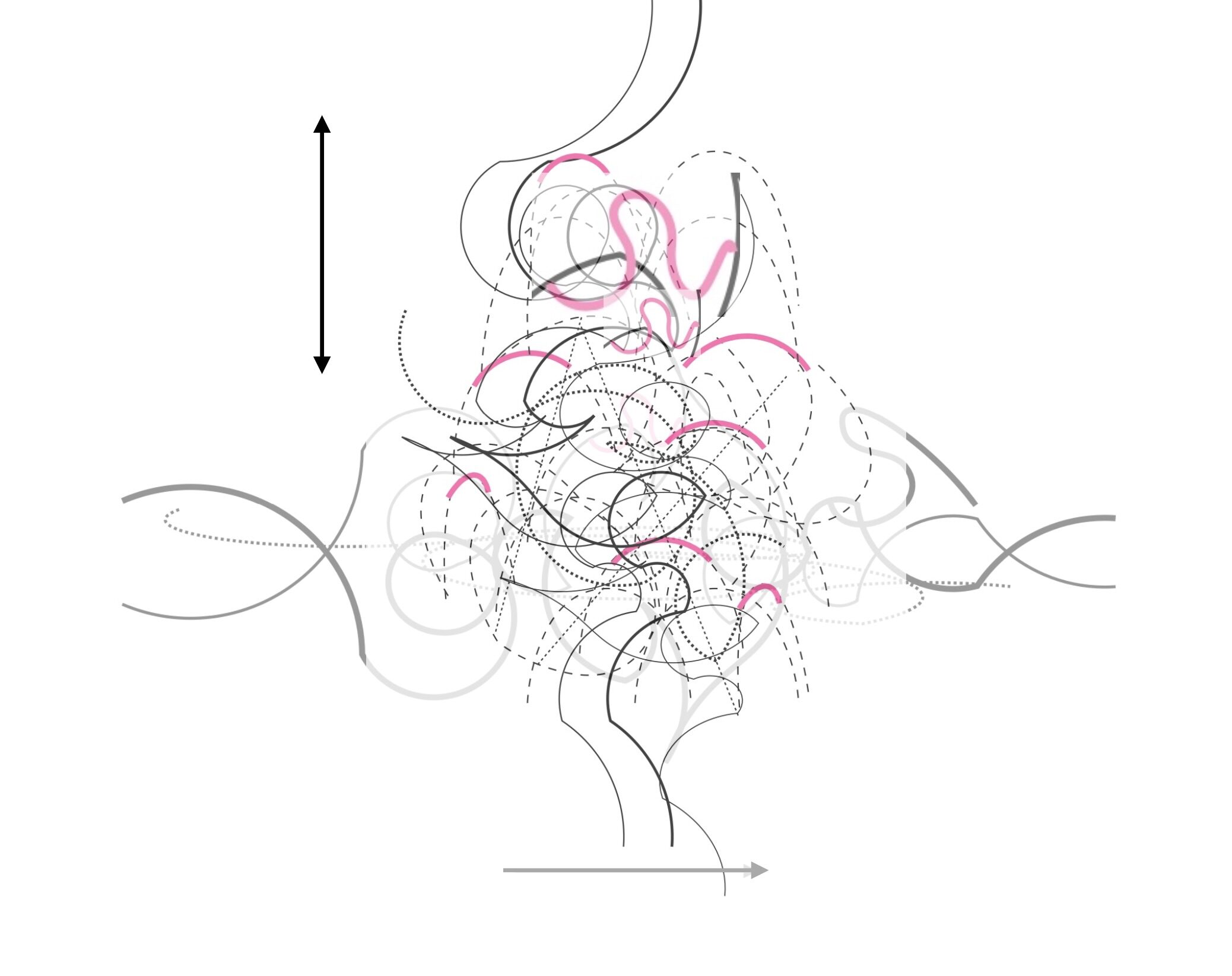
I A poem may be made illegible not only by neglecting its language, but also by deciding in advance what its language is to conjure into the light of the world. The first form of blindness overlooks the word; the second sees only what it has already decided to find there. Between them lies the…
Category: Language
Style Brisé (I): Modernity’s Musical Ghost
“Searching (for) limits” beyond those previously assigned and “getting rid of the glue” that held everything together in organic fashion: these are the expressions Richard Taruskin employs to characterize two distinct, though broadly contemporaneous, aesthetic responses within post-Wagnerian European music. The first, associated with the German tradition of Mahler, Strauss, and ultimately Schoenberg, sought to…
Thought as Music: Sappho
μάτρι ἀγάπατᾳ μοι In this concise two-part essay, I explore how specific prosodic qualities do not merely influence but fundamentally construct content in early (i.e., archaic or pre-classical) Greek thought – whether musical-poetic (Sappho) or aphoristic-philosophical (Heraclitus). In Sappho’s case, by prosodic qualities I mean, in particular, metric length and breathing, rhythmic phrasing and musical…
Four Notes on Plato… Upstream
Hypercomplex: there is probably no better adjective to describe Plato’s thought; and this explains, too, why it is so very easy to lose sight of what it invites us to reflect on and ponder, which is nothing different from thought’s endless beginning, meandering itineraries, and inner paradoxes. But then, how can one speak of essentialism…
AΓAΛMA
The Ancient-Greek word ἄγαλμα (agalma) did not merely designate a statue, which we wrongly take to be its most common meaning. In Homer, it is the precious object desired by everyone that embellishes, by making it shine, the harness of the horse of the best among the warriors – in short, it is the treasure…
Dreams as the Fugues of the Unconscious? On Musical Polyphony and Schizoanalytic Pragmatics
For Mahoro Murasawa and Kevin Swierkosz-Lenart I Like everything else, music is (to use a Guattarian concept) an “optional matter”; that is to say, there are many ways to organize any sound material. Take, for instance, the chromatic scale, which represents a way of classifying and gathering together a finite number of sounds, namely, twelve…
Seeds of Singing – or, What Else Can a Soul Be and Do
Pasolini’s Teorema (1968) ends with one of the characters, “Paolo,” a bourgeois middle-aged man, running naked through the wilderness out of shame, a profound anti-bourgeois shame. For, while Paolo is able to break off with the bourgeois order that he himself incarnates as both a bourgeois father and businessman, he proves incapable of replacing it…
The Eidos of a Mango Tree
I Unlike what Deleuze (1990, pp. 253-66) claims, it is not Plato but Aristotle (in An. Pr., I, 27) who reduces the individual to typological classification (this is an individual mango tree, mango trees belong in the mangifera genus, which are part of the anacardiaceæ family [fig. 1], etc.), which means that, from Aristotle’s standpoint,…
Metaphor and Meaning (I)
The Yanomami myth of the “falling sky” – which resembles that of the Celts reported by Ptolemy to Alexander during his campaign in Thrace against the Illyrians – offers a perfect site to briefly explore the relationship between metaphor and meaning. Davi Kopenawa narrates the myth thus: At the beginning, the sky was still new…
What Is Language?
Certainly not primarily a communication tool. Nor a particular subset of learned behaviour. Nor a cognitive outcome of human evolution. Nor a set of sentences whose truth value could be quantified. Nor a socially-agreed-upon system of sounds and written phonemic symbols or ideograms to which meaning would be conventionally attached too. Nor a disciplinary apparatus…