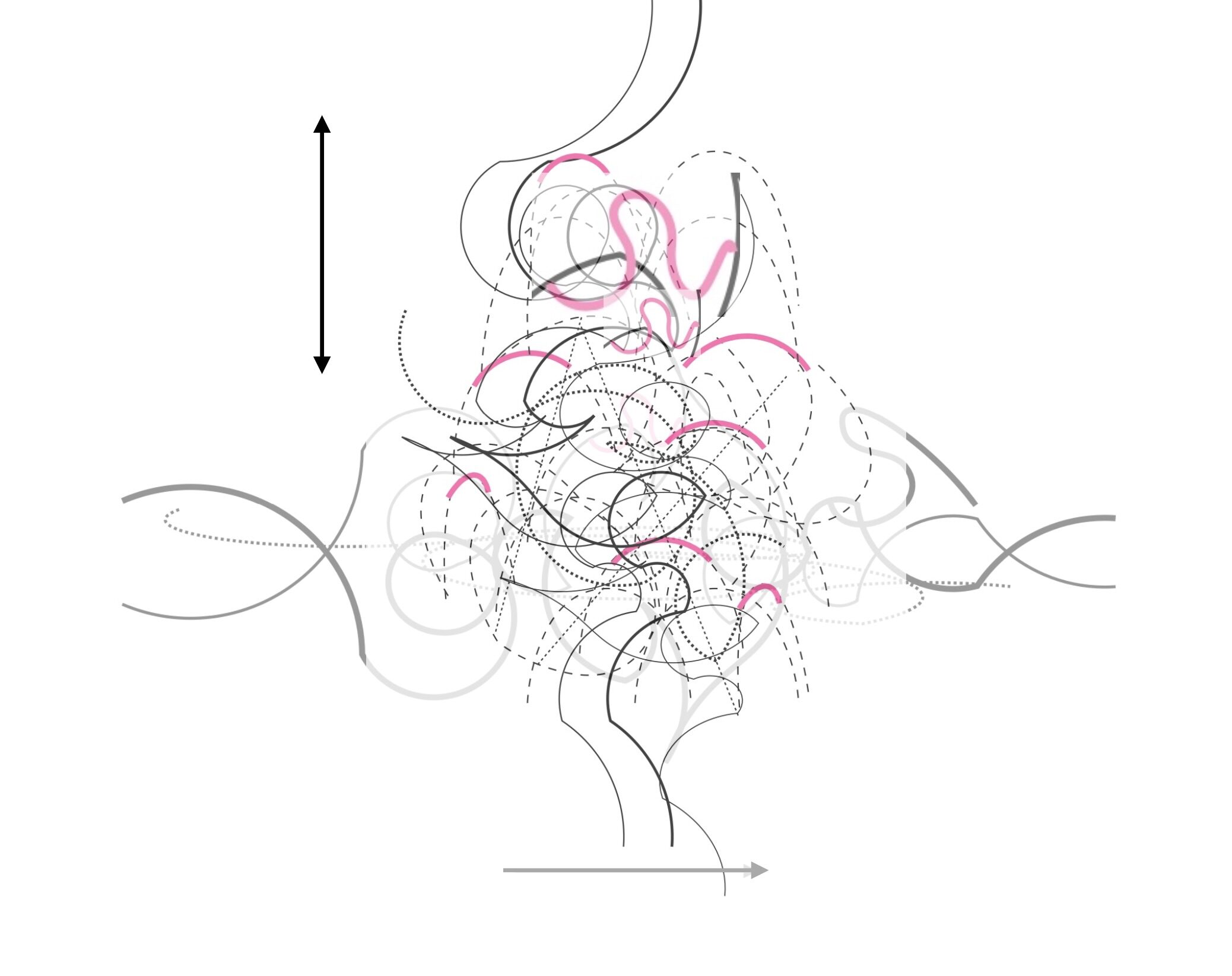
I should like to briefly suggest an inverse parallel here. In Malraux, the proximity of death makes the world present itself anew with a strange intensity: a world that is not merely a biographical backdrop, but an irreducible exteriority that moves and exceeds the subject who experiences it. In Blanchot, by contrast, death calls into question the very possibility…
Category: Thought
In Defence of Góngora
I A poem may be made illegible not only by neglecting its language, but also by deciding in advance what its language is to conjure into the light of the world. The first form of blindness overlooks the word; the second sees only what it has already decided to find there. Between them lies the…
From Musical Forms to Transcendental Affective Fields: The French Suite
Despite its many virtues, Aristotle’s hylomorphism, when it becomes a shortcut, can obscure the depths and complexity of things. We are accustomed to treating music, for instance, as a combination of matter and form: as the structuring of those specific types of sounds we call musical notes under a more or less regular formal pattern—Fantasia,…
The World in Three Gestures—Correggio, La Tour, Velázquez
Three images stand in Berlin’s Gemäldegalerie in a kind of silent disproportion to one another, as though the museum had accidentally opened a breach and allowed three distinct ontological climates to coexist without mediation. One gets immediately caught in their differing ways of breathing—one swollen with movement, one suspended in inward gravity, one abruptly turned…
Style Brisé (I): Modernity’s Musical Ghost
“Searching (for) limits” beyond those previously assigned and “getting rid of the glue” that held everything together in organic fashion: these are the expressions Richard Taruskin employs to characterize two distinct, though broadly contemporaneous, aesthetic responses within post-Wagnerian European music. The first, associated with the German tradition of Mahler, Strauss, and ultimately Schoenberg, sought to…
A Note on Brancusi’s Sleeping Muse
… But what is a Sleeping Muse? What is a slumbering Muse? A Muse—that is, she from whom inspiration flows: perhaps fitfully for us, yet without interruption when seen from her own side; she who therefore abides within herself in a state of perpetual wakefulness; who inhabits that realm as we shall never be able…
Ontologies of the Fragmentary
The greatness and the misery of an era—each of them probably containing both in similar proportion—can certainly be measured in different ways. One such way consists in examining the richness or poverty of its ideas not only with regard to their number, but also to their complexity; and this, in turn, depends, at least in…
Thought as Music: Sappho
μάτρι ἀγάπατᾳ μοι In this concise two-part essay, I explore how specific prosodic qualities do not merely influence but fundamentally construct content in early (i.e., archaic or pre-classical) Greek thought – whether musical-poetic (Sappho) or aphoristic-philosophical (Heraclitus). In Sappho’s case, by prosodic qualities I mean, in particular, metric length and breathing, rhythmic phrasing and musical…
Aphrodite’s Wounded Hand
Ancient Greek pair of eyes made of bronze, marble, frit, quartz, and obsidian. 5th century BCE or Later. Metropolitan Museum, New York. Object 1991.11.3a, b I A fresh look at Greek mythology requires perhaps that we view its gods (θεοί) both as those who offer us a deeper “insight” into things – for with just…
On Contingency & Worlding
Assuredly, reality’s laws, which Meillassoux interprets exclusively through physics’ lens (thereby bracketing biology) could be otherwise. But partly. Here, they are X; elsewhere, they are Y or Z or something else. Yet in their making many different factors, and types of causes, coalesce, some of them being contingent, others being necessary instead, and they do…