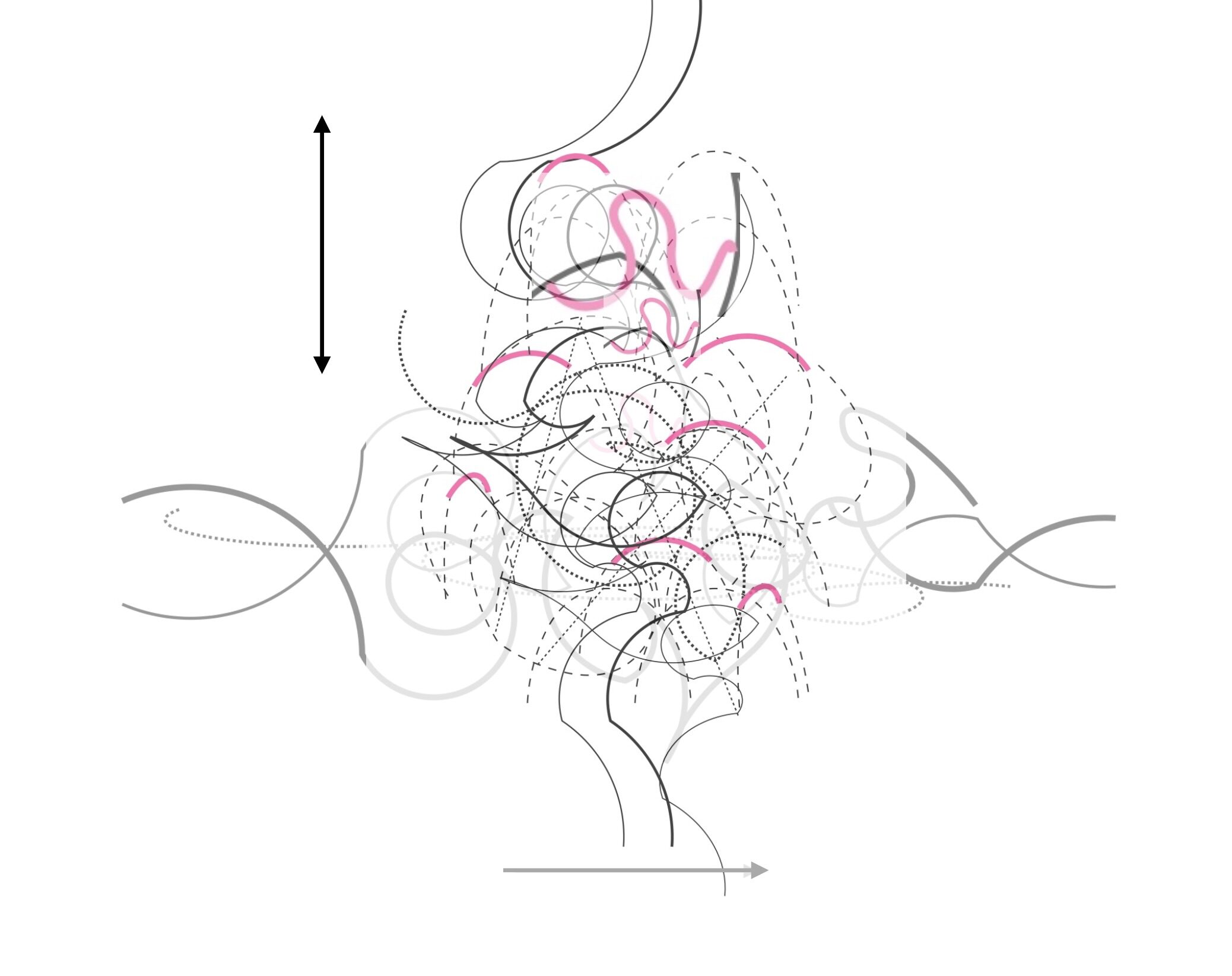
Despite its many virtues, Aristotle’s hylomorphism, when it becomes a shortcut, can obscure the depths and complexity of things. We are accustomed to treating music, for instance, as a combination of matter and form: as the structuring of those specific types of sounds we call musical notes under a more or less regular formal pattern—Fantasia,…
Category: Music
Style Brisé (I): Modernity’s Musical Ghost
“Searching (for) limits” beyond those previously assigned and “getting rid of the glue” that held everything together in organic fashion: these are the expressions Richard Taruskin employs to characterize two distinct, though broadly contemporaneous, aesthetic responses within post-Wagnerian European music. The first, associated with the German tradition of Mahler, Strauss, and ultimately Schoenberg, sought to…
Ontologies of the Fragmentary
The greatness and the misery of an era—each of them probably containing both in similar proportion—can certainly be measured in different ways. One such way consists in examining the richness or poverty of its ideas not only with regard to their number, but also to their complexity; and this, in turn, depends, at least in…
Thought as Music: Sappho
μάτρι ἀγάπατᾳ μοι In this concise two-part essay, I explore how specific prosodic qualities do not merely influence but fundamentally construct content in early (i.e., archaic or pre-classical) Greek thought – whether musical-poetic (Sappho) or aphoristic-philosophical (Heraclitus). In Sappho’s case, by prosodic qualities I mean, in particular, metric length and breathing, rhythmic phrasing and musical…
Aphrodite’s Wounded Hand
Ancient Greek pair of eyes made of bronze, marble, frit, quartz, and obsidian. 5th century BCE or Later. Metropolitan Museum, New York. Object 1991.11.3a, b I A fresh look at Greek mythology requires perhaps that we view its gods (θεοί) both as those who offer us a deeper “insight” into things – for with just…
Dreams as the Fugues of the Unconscious? On Musical Polyphony and Schizoanalytic Pragmatics
For Mahoro Murasawa and Kevin Swierkosz-Lenart I Like everything else, music is (to use a Guattarian concept) an “optional matter”; that is to say, there are many ways to organize any sound material. Take, for instance, the chromatic scale, which represents a way of classifying and gathering together a finite number of sounds, namely, twelve…
Moons and Monads
Like being, time is said in many different ways. A day on Venus, for instance, lasts 243 Earth days, which means that, supposing one could see a full Moon from Venus (which is not possible, as when the Moon is full it is opposite to the Sun, while Venus is closer to it), supposing one…
Picturing Schumann’s Ghost Variations in Abstract Terms
For Luigi Attademo We have recently written on Schumann’s Morning Songs, Op. 133, for piano. Like these, the Theme and Variations in E-flat major for piano WoO 24, also know as Geistervariationen (Ghost, or Spirit, Variations, due to Schumann’s self-declared source of inspiration as it is mentioned in Clara Schumann’s diary of February 17, 1854),…
On Schumann’s Songs of Dawn
Jankélévitch famously wrote that “only music can express things which are infinitely ambiguous, as, unlike logic, music must not opt between things which are incompossible or contradictory: it can bring forth and develop, with the help of polyphony, several independent lines of discourse.”(⦼) As a matter of fact, poetry can do it, as well. Consider,…
Ulysses’s Siren
For Pere Ros Suppose a series of musical notes forming a melody (the black circles are the notes, the arrow indicates their succession): Suppose, though, that instead of hearing the notes sounding cleanly one after another, some of them were shaken by a gusty wind; as a result, such notes would “look” more or less…