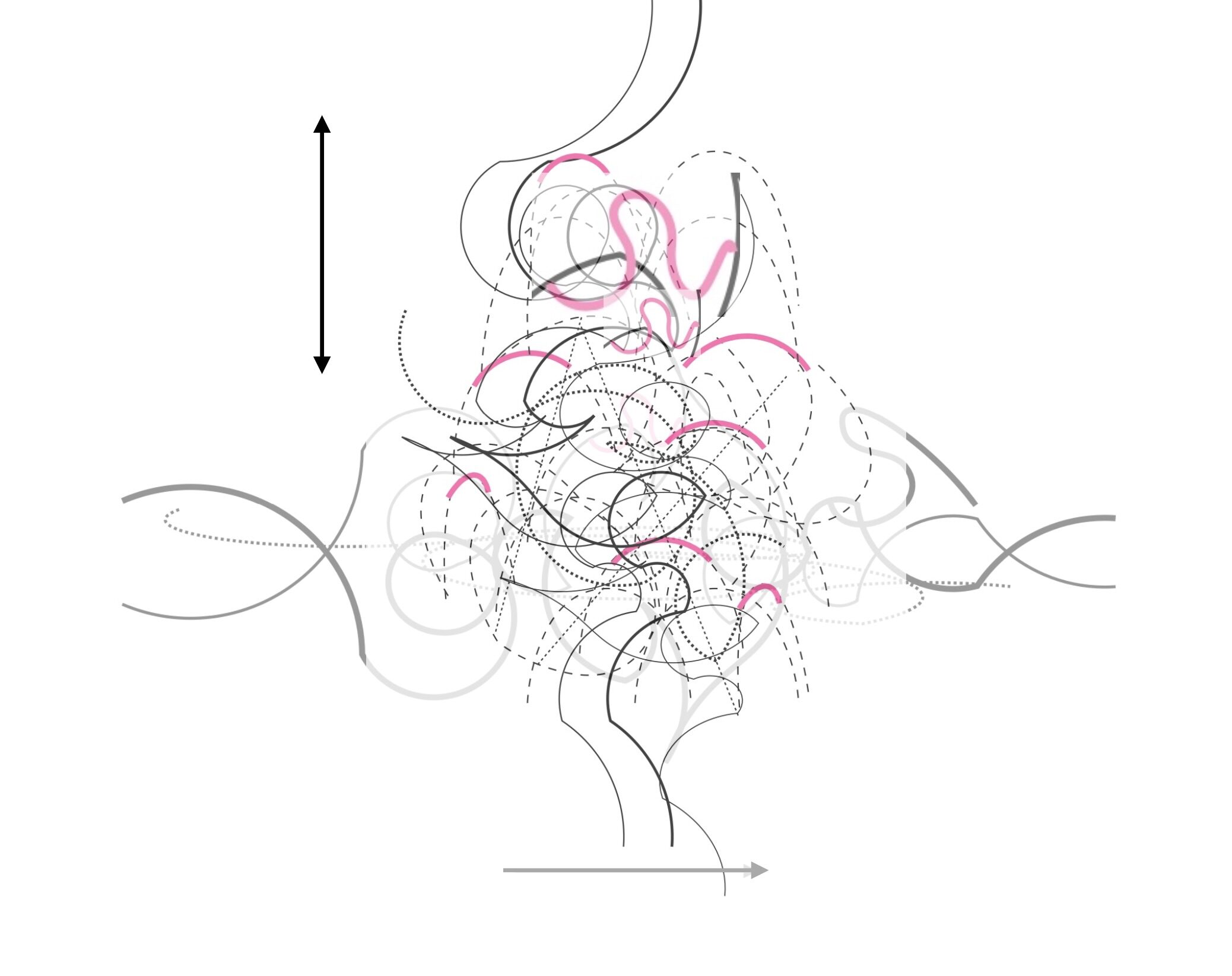
The greatness and the misery of an era—each of them probably containing both in similar proportion—can certainly be measured in different ways. One such way consists in examining the richness or poverty of its ideas not only with regard to their number, but also to their complexity; and this, in turn, depends, at least in part, on their semantic narrowness or breadth.
Now, few ideas could serve to characterize our age as well as that of the “fragment,” an object of every kind of cult. And yet, amid the variety of these cults, what is striking is the semantic one-dimensionality of the term. For here and there the fragmentary is taken as synonymous with that which drifts aimlessly, thereby eluding all being. In other words, the fragmentary appears today to be the object of a univocal ontology. Yet nothing supports such an ontology, except perhaps the monotheistic insistence from which our age—despite its attempts to erase what seems to it both excessive and undesirable—has been unable to free itself; indeed, it remains captive to its shadow. For who has decided that multiple ontologies of the fragmentary are not possible?
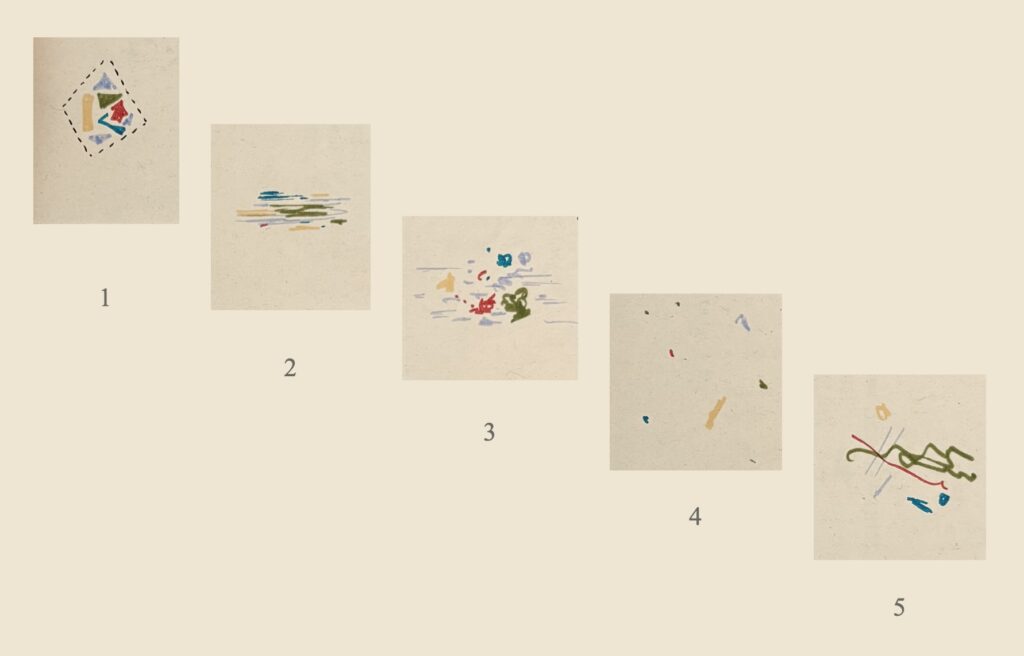
By way of a rapid sketch, and considering only the aesthetic-musical development—if development is the word—of the last two hundred years, one might distinguish, for example, and mentioning only five cases as clear as they are remarkable, between:
(1) the late Beethoven, for whom, although the fragmentary often becomes, in contrast to Classicism, a point of departure—and one invested with remarkable gravity—it is nonetheless subordinated to a latent totality that one seeks precisely to delineate (the third composite movement of his Piano Sonata in A-flat Major, Op. 110, here performed by Mitsuko Uchida, may serve as an illustration):
(2) that of the late Schubert, for whom the fragmentary instead opens up a paradoxical time-space, intimate yet distant at once, in which being and memory emerge, vanish, and recover themselves again through their passage among reflections and ashes (check, in turn, the first movement of his Piano Sonata in G Major, D. 894, also performed by Uchida):
(3) that of Debussy, in whom relatively autonomous perceptions and impressions coexist atmospherically, thus giving rise to an archipelago of sensations (listen, for instance, to the first series of his Images inédites, L. 87, as interpreted by Alain Planès):
(4) that of Webern, where micro-irruptions of every kind revolve around the void that receives and traverses them (check the first of his Variations for Piano, Op. 27, here in Elisabeth Leonskaja’s interpretation):
(5) and that of Cage, where the fragmentary becomes a non-set of independent events behaving like drifting disjecta membra (as one may infer from the opening section of his Music of Changes, here performed by David Tudor):
Certainly, these are five ideas—or, more precisely, ontologies—of the fragmentary profoundly distinct from one another. They might be pictured thus:
In short, the fragment proves not to be the sign of a single historical condition, but the site of multiple and irreducible possibilities of meaning. The greatness or misery of our age may therefore lie less in its devotion to fragmentation than in its capacity—or incapacity—to think the plurality of ontologies concealed within it. For an epoch becomes impoverished precisely when it mistakes a single inflection of any concept for its only possible modulation.
(Another matter, of course, is where our preferences tend to align.)