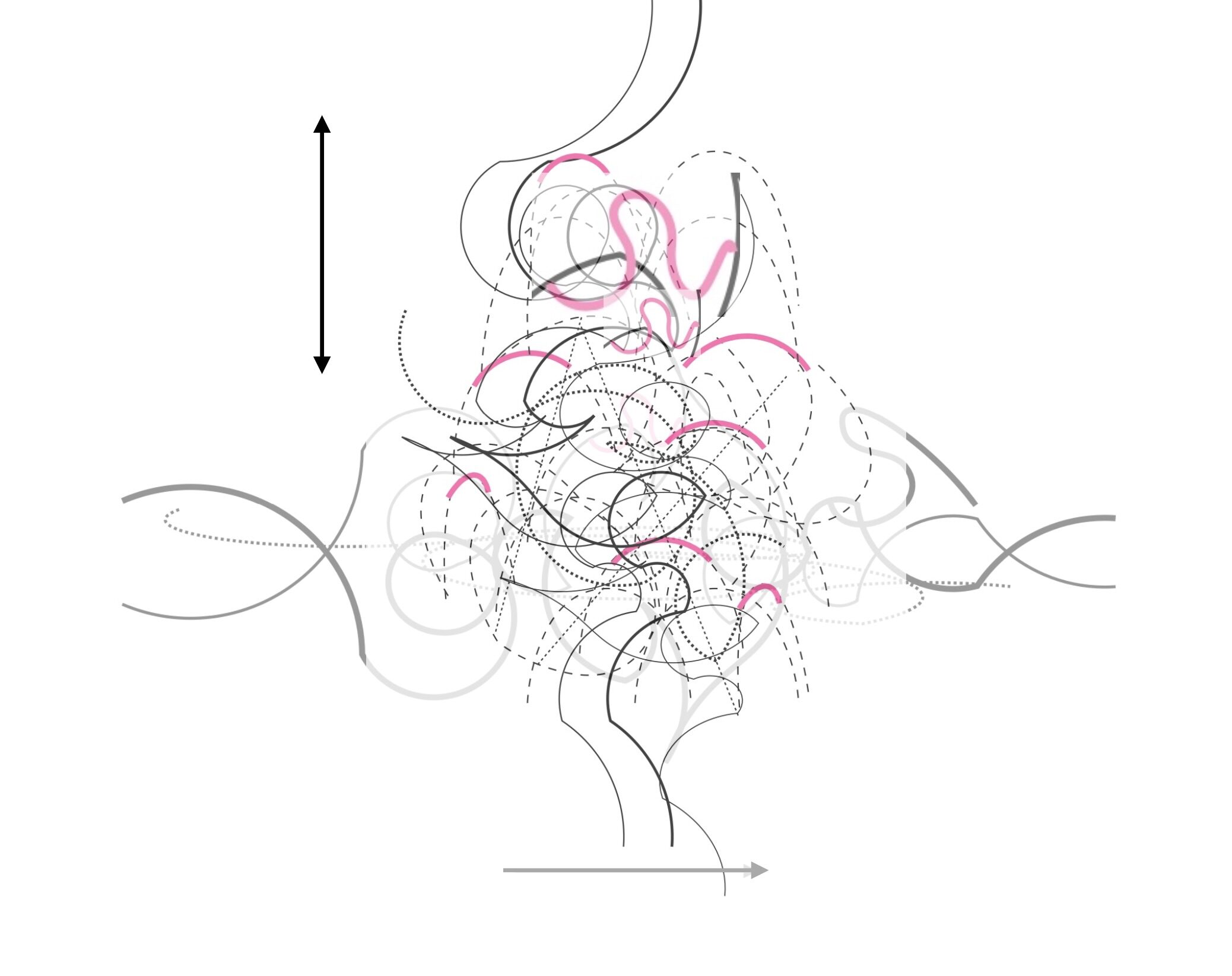
We dance with one another, we reinvent ourselves through one another, and we both disappear in the labyrinth of our dance. Our dance is a collection of many moves and many games, old and new. We are many invented moves and many reinvented games, including that of being married.
Sofya Shaikut – I am a performative artist, butō dancer, and writer working at the intersection of contemporary philosophy and educational politics. I explore dance as a practice that enhances our potential for transformation vis-à-vis the eternally recurring forces that make and unmake our lives (love, hatred, tenderness, strife…) in the persuasion that like this we can creatively re-situate ourselves amidst the worlds we build and in relation to the earth in which they are rooted. Among the different teachers with whom I have trained, those who influenced me the most are Atsushi Takenouchi and Imre Thormann. You can learn more about my work here.
Carlos A. Segovia – I am an independent British-born, Spanish philosopher and writer, working on contemporary philosophy in relation to questions of post-nihilism and meta-conceptuality, at the crossroads of the philosophy of mythology; and author of fifteen books. Among my recent publications, Dionysus and Apollo after Nihilism: Rethinking the Earth–World Divide (with Sofya Shaikut; Brill, 2023), Guattari Beyond Deleuze: Ontology and Modal Philosophy in Guattari’s Major Writings (Palgrave Macmillan, 2024), Félix Guattari and the Ancients: Theatrical Dialogues in Early Philosophy (with Gary Genosko; Bloomsbury, 2025), and Nietzsche’s Pre-Dionysian Apollo and the Limits of Contemporary Thought (Peter Lang, 2025). Among my forthcoming ones: The Wor(l)d in the Crucible: Poetic and Philosophical Explorations, after Zambrano and Blanchot (under consideration at Palgrave Macmillan). I have held various academic positions for over a decade. Yet, convinced that higher education within mainstream academia is undergoing a form of intellectual exhaustion – brought about by academic standardization, epistemological bureaucratization, and the compartmentalization, ideologization, and commodification of knowledge, alongside the cultivation of middlebrow mediocrity and the reduction of learning to a consumer experience – I have turned to other scholarly venues in which thinking may still be pursued for what it truly is: not a means of securing conceptual control over life by adding minor exegetical footnotes to what has already been thought, but a way of confronting the unknown – the as-yet unthought but thinkable – with renewed awe. In this sense, I find inspiration in René Char’s haunting question: “How are we to live without the unknown before us?” You can learn more about my work here.
Write to us at sofyashaikut@gmail.com & segoviamail@icloud.com