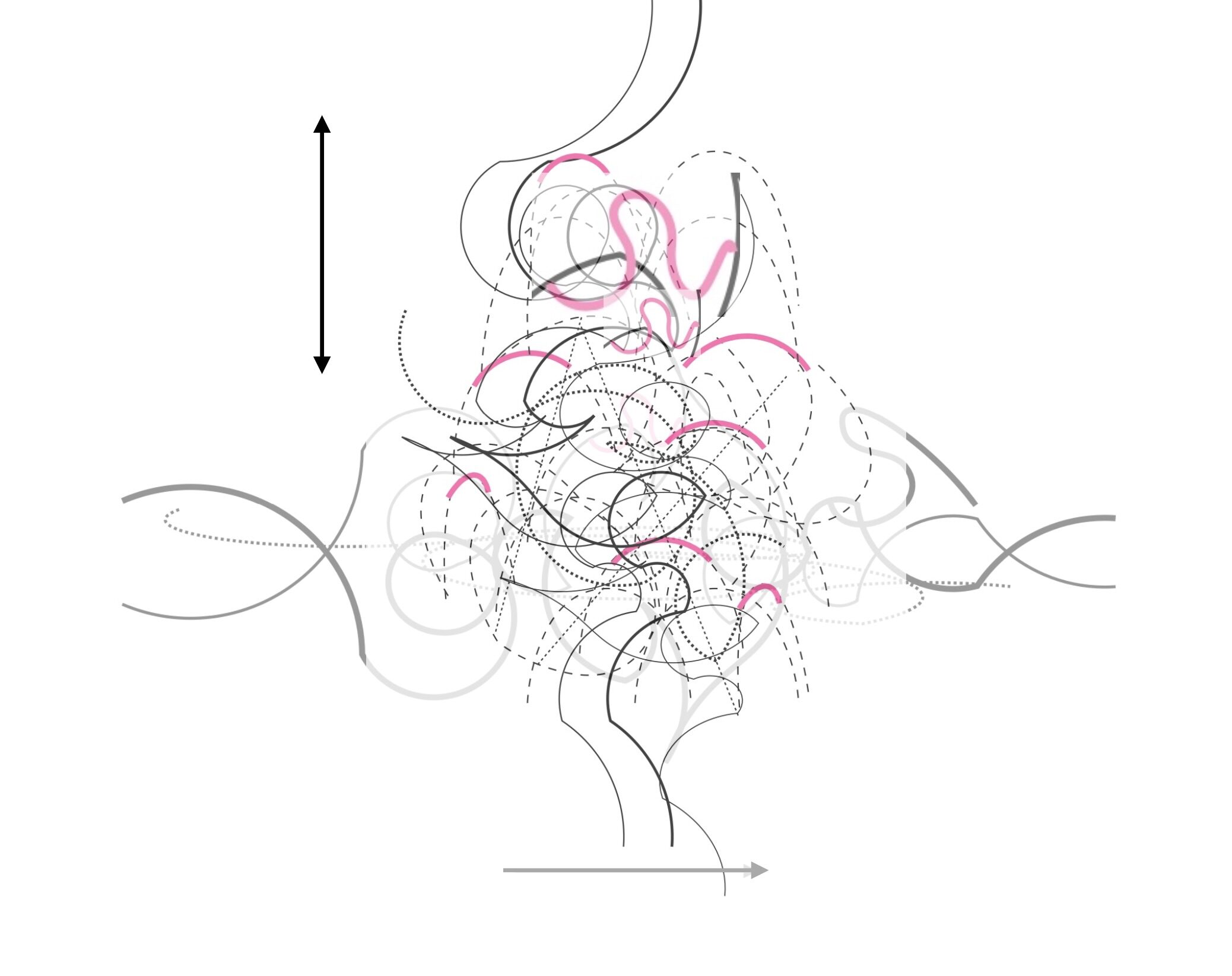
Assuredly, reality’s laws, which Meillassoux interprets exclusively through physics’ lens (thereby bracketing biology) could be otherwise. But partly. Here, they are X; elsewhere, they are Y or Z or something else. Yet in their making many different factors, and types of causes, coalesce, some of them being contingent, others being necessary instead, and they do so in different proportions and to different extents. Plus, oftentimes laws tend, and indeed manage, to remain valid for some time. Should then contingency be thought of as being absolute or relative? It looks to me that only if one assumes it beforehand as being absolute, one is entitled to infer its (unproven) absoluteness from its (patent) relativity. Aristotle’s threefold (in fact, fivefold) distinction might prove helpful here: There is (a) that which happens “always” (κατὰ τὸ ἀεὶ; e.g., the sun rises), (b) that which happens “usually” (ὡς ἐπὶ τὸ πολύ; e.g., humans are born with two hand and five fingers on each), and (c) that which happens by “accident” (κατὰ συμβεβηκός; e.g. #1, one finds treasure while digging to plant a tree, in which case the accidental cause is to be seen, says Aristotle, as a byproduct of a purposeful cause, or, I would rather have it, as being perpendicular to the latter in a kind of co-causality, but without the causes thereby implied being contingent in turn; e.g. #2, something provokes a fire, in which case two causes accumulate randomly but, again, without each cause being contingent in turn). Therefore, while contingency ought to be viewed as a primary component of reality’s appearance, it cannot be claimed to have the upper hand; nor can it be deemed its ultimate cause, unless one (i) forces it into it by simplification and (ii) intends anyway, to attribute all there is to just One cause, again by simplification.
That, as far as contingency is concerned. On worlding, which represents contingency’s reverse: A world (any world) can be viewed as a meaningful and architectural distribution of such or such components and of their relations: meaningful, because that specific distribution must somehow make sense (that is to say, it cannot be random); architectural, because it cannot merely display relations of contiguity. Besides, at the very core of any world something like a defining principle or value must shine forth: a basal intuition – an ἀρχή – that makes possible that world and gives it its own growing impulse, regardless of the fact that such principle may engender other ἀρχαί along the way and that the content and the boundaries of that particular world will be ever changing, for a world need not be something closed upon itself.
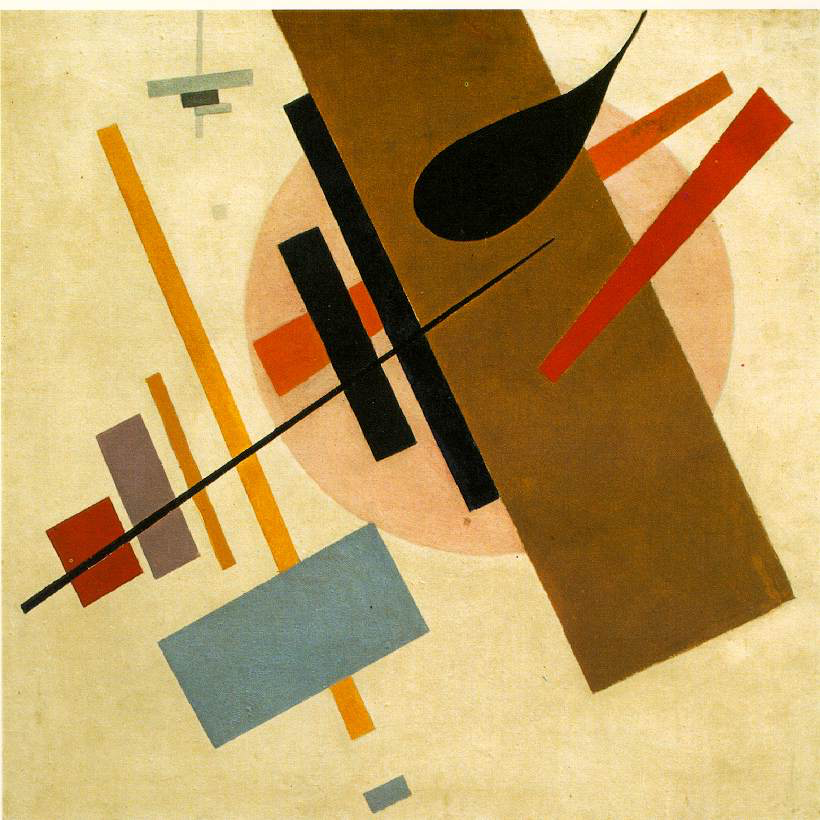
Kazimir Malevich, Supremus No. 55 (1916). Art Museum of Krasnodar