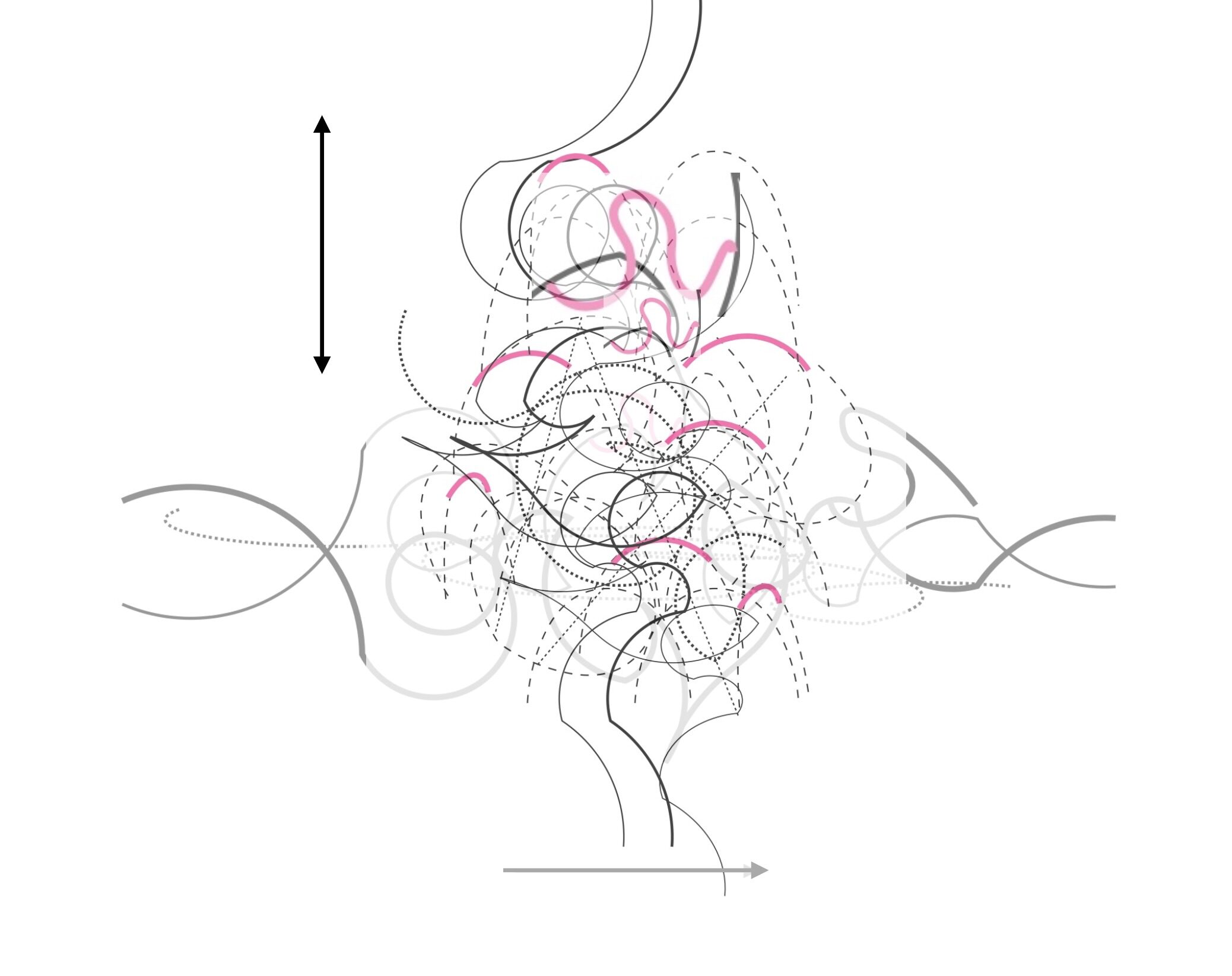
1 “The power to change form – power over the image – can be seen as the ultimate realisable power in a society dominated by consensual (visual) image,” writes Roy Wagner.(⊛) By “consensual (visual) image” Wagner means what is commonly (and poorly) known as “tradition.” Take, for example, any extra-modern ritual: on the day in…
Category: Life
Bodies, Ghosts, Ancestors
It is tempting to view Plato’s tripartite division of the soul in Phaedrus 245c–253e as an instantiation – whose conceptual complexity is easily overlooked when the image it conveys is turned into a myth in the modern sense of the term, i.e. into an object of belief – of what we have called a semiotic…
Satyajit Ray’s Formal Beauty
Kurosawa famously said that “not to have seen the cinema of [Satyajit] Ray means existing in the world without seeing the sun or the moon.” Ray’s opera prima, পথের পাঁচালী Pather Panchali [Song of the Road] (1955), fits that description admirably.(*) Labelling it – as it is often done – a “neorealist” film misses, though,…
Capitalism as Acculturation – or, the Revolutionary Force of the Past
December 9, 1973. In an article published in the Corriere della Sera Pasolini laments the acculturation brought about by capitalism. In particular, he deplores the loss of the “peripheral cultures which, until a few years ago had their own life assured – essentially a free life, even if within the poorest, or even miserable, peripheral…
More on Chaos, Rhythm, and Forms
We have written elsewhere on schizophrenia, following Jean Oury, as a “rhythmic distortion.” We would now like to add that such distortion is neither what one presences when one witnesses a schizophrenic delirium nor what one enters when one enters one. For, as Freud stresses, it is at re-building their collapsed worlds that psychotics aim…
Dionysos and Apollo
I Dionysos and Apollo Dionysos and Apollo shared one sanctuary: Delphi, located on a ridge of the Parnassos mountains overlooking the Valley of Phokis and the surrounding hills, near the town of Krissa north of the Gulf of Corinth in today’s region of Sterea or Central Greece. Dionysos was worshiped there in the winter, whereas…
Is the Earth Round?
“The earth is round.” It would be possible to contest this commonplace affirmation and to claim that the earth is flat instead, like a disc. Yet today almost nobody would contest the fact that the earth is round. Still, if it may be true that the earth is round, it is not clear whether the…
Chaos, Rhythm, and Forms
Schizophrenics are like unstable points inside machinic circuits, thus their frequent drawings and narratives on the “influencing machines” they are, in their perception, connected to and controlled by. Generally, these “machines” reflect the technological status of the historical period in question: they can be immaterial (e.g. religious or theological) machines, mechanical machines with gears and…
Endemic Pandemic Pandemonium
A devastating plague dominates Thebes. Sophocles (Oedipus Rex, first intervention of the chorus, vv. 158-215) has its people call on the gods: First we call on Athena, deathless daughter of Zeus, / and Artemis, earth upholder, […] / and Phoebus [Apollo], the far shooter, / come to us now […] / Our sorrows defy number;…
Post-Nihilist Meanderings on the Shores of Mythology, Tragedy, Poetry, and Enigma
It wasn’t long. It only lasted four hundred years. But the beautiful thing is that we can assist to its birth and death. The beautiful thing and the sad thing. It first surfaces in Homer’s Iliad, and it dies with Aristotle, in Aristotle. Strangely, we can presence both events. Yet we can only understand the…