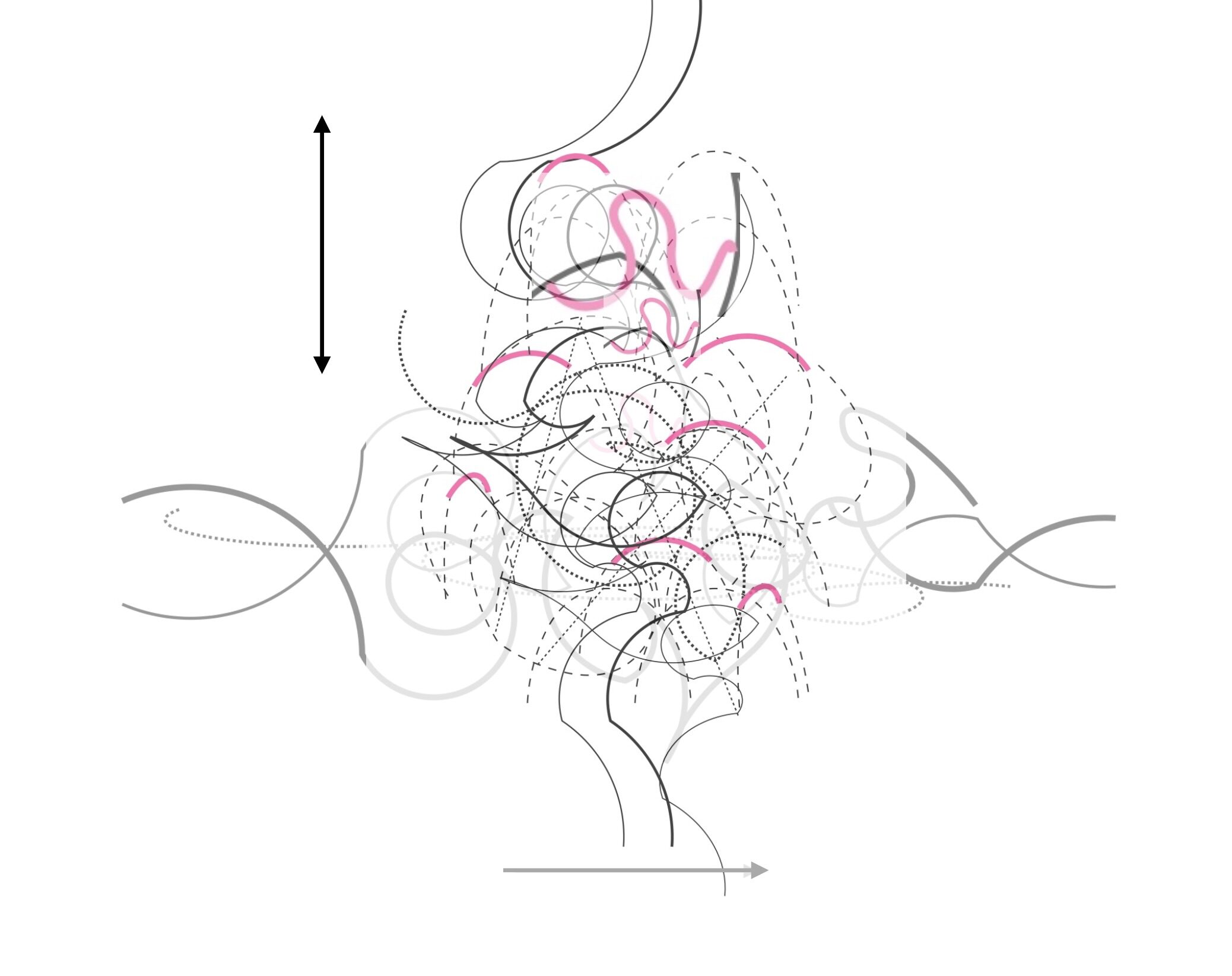
Le vierge, le vivace et le bel aujourd’hui
Va-t-il nous déchirer avec un coup d’aile ivre
Ce lac dur oublié que hante sous le givre
Le transparent glacier des vols qui n’ont pas fui !
– Mallarmé
Beneath the frost but touched then, however faintly, by the swan’s wing:
I
What one manages to see in something depends upon the breadth or narrowness, the greatness or smallness, of one’s spirit.
Thus it has become customary to reduce religious beliefs to a series of socio-psychological pathologies, and there is certainly a space of consideration here that cannot simply be dismissed: Mary, for instance, may be understood as a prototype of the submissive woman, of one who accepts what is imposed upon her and submits herself to a will other than her own—a figure that has too often been employed to justify certain forms of gender domination. And against this, there are those who raise their voices in protest: no, they say, this is not properly a matter of submission, but rather of being invited to make God’s will one’s own, of awakening in oneself a disposition towards what exceeds us, and of recognising in the Incarnation a form of divine closeness and mercy which does not begin only at the Cross, even if it finds there, together with the Resurrection, its fulfilment.
Yet neither reading touches, ultimately, what is essential. Neither one nor the other. Nor, of course, the notion of superstition, which is perhaps the narrowest form of all, since it reduces what ought to open the spirit to yet another object of denunciation. What is required, rather, is to draw the sacred out from within the religious. For what moves us in Mary may not, in the first instance, be a particular doctrine of salvation, nor the psychological or social model of a woman who submits, but something much more elementary and, precisely for that reason, more difficult to grasp: delicacy.
Delicacy not as a sentimental virtue, nor as weakness in the face of strength, but as a mode of being that does not immediately need to violate that which presents itself to it. There is something in it which the medieval world, insofar as it was a world of men, of war, honour, conquest and struggle, seems to have found especially difficult to express: a relation to reality which does not consist first of all in imposing oneself upon it. Opposed to the will that conquers, a receptivity that receives; opposed to the force that orders the world, a kind of availability that allows something to happen within us.
II
Perhaps this is why the feminine, when liberated from its reduction to a predetermined social role, can retain here a deeper significance. Not because receptivity is exclusively feminine—for that would merely impoverish it in another way—but because in certain feminine figures there has remained particularly clear the possibility of a human being not closing oneself before that which one cannot produce or control. Mary is not significant because she renounces herself before another will, nor because her own will is without importance. What matters is precisely that she is able to say yes without knowing beforehand what it is to which she is saying yes. Her significance lies not in having controlled the event, but in having been able to receive it.
And perhaps this is the first condition of any experience of the sacred: that something may happen within us which does not proceed entirely from us. That there remain, in the midst of our determination to dispose of things, a region of the spirit which does not hasten to turn everything it receives into something it already knows. What is required here is not humility, in the sense of making oneself smaller, but a loosening of the self’s claim to be the measure of what is. A relinquishing, however slight, of the compulsion to determine beforehand what may be real.
In this sense, Mary would be not so much the image of one who submits as of one who remains open. And between submission and remaining open lies all the distance that separates servitude from availability. It is one thing to yield before a stronger will; it is an altogether different thing to consent to that which exceeds us.
III
There is, perhaps, a form of égarement de l’esprit proper to this experience. Not madness, nor confusion, nor the loss of reason, but the moment in which the spirit is led astray from the paths along which it has learned to recognise and master things. To be led astray is, in this sense, not necessarily to lose oneself, but to cease, for a moment, to know where one is going. Something becomes possible precisely because the usual orientation has been interrupted. The spirit no longer stands entirely within the order it has itself established; it finds itself exposed to what it cannot yet place, name, or possess.
Something of this seems already to be at work in Parmenides’ poem. Aletheia (ἀλήθεια) means truth, but not truth merely as the correctness of a proposition: rather, truth as unconcealment, as that which comes out of concealment and shows itself. And Aletheia is also a goddess. This is not simply a rhetorical personification. Truth appears as something that comes towards us, something before which we find ourselves, rather than something that we simply possess by knowing it. And significantly, Aletheia appears in the company of Peitho (Πειθώ), persuasion, here inseparable from Aphrodite. Truth does not merely compel by the force of demonstration; its appearing also draws, attracts, persuades. It asks not only to be understood, but to be received.
IV
Perhaps this is what delicacy makes possible: not the passive acceptance of what presents itself, but the capacity to be moved by an appearing without immediately reducing it to the categories by which we have learned to master the world. The égarement de l’esprit would then be less a departure from truth than the loosening of the hold by which we ordinarily determine in advance what truth may be. Only then can what appears cease to be merely an object of knowledge and become an event.
Perhaps the sacred can only be approached from there: from that delicacy which does not seek to seize it, from that receptivity which does not confuse openness with passivity, from that capacity to allow something to stand before us without immediately reducing it to the measure of our own understanding. For only when we cease to fill the world entirely with our own will does there remain a space in which the sacred can appear—not as an object before us, but as something whose appearing displaces us from where we thought we stood, thereby allowing us, if only for an instant, to be born anew…
… to flights that have not yet fled.
Beneath the frost.
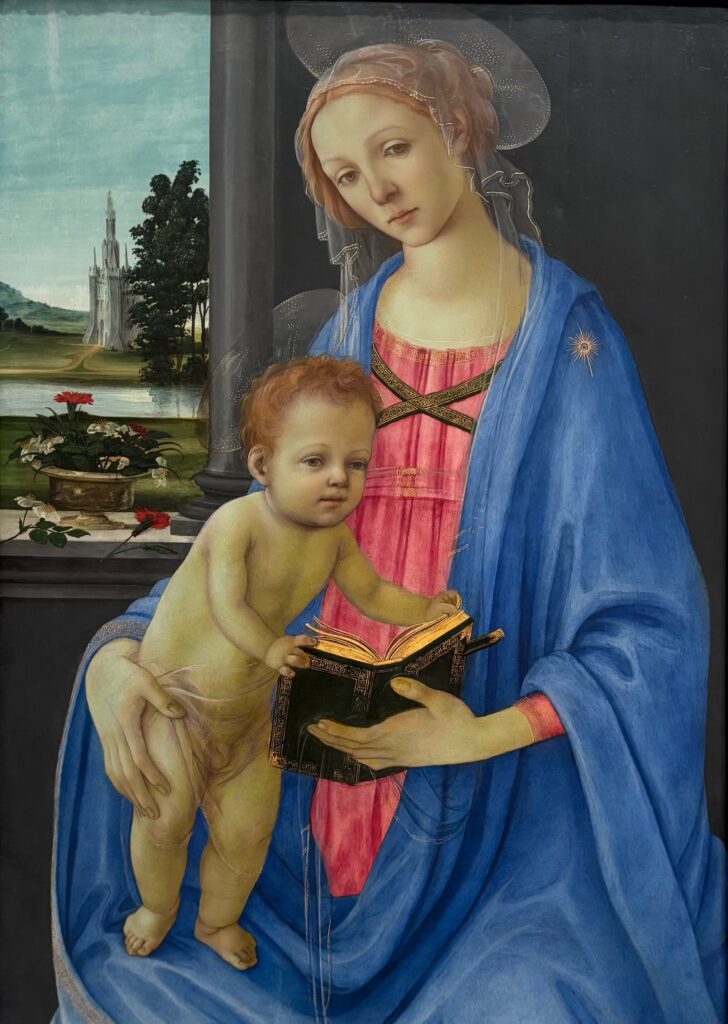
Filippino Lippi, The Virgin and the Child, 1475–1480 (Berlin, Gemäldegalerie)